:no_upscale())
The Lega Basket Serie A is focusing on digital accessibility: a new step forward with the support of Infront and Eye-Able.
Read story
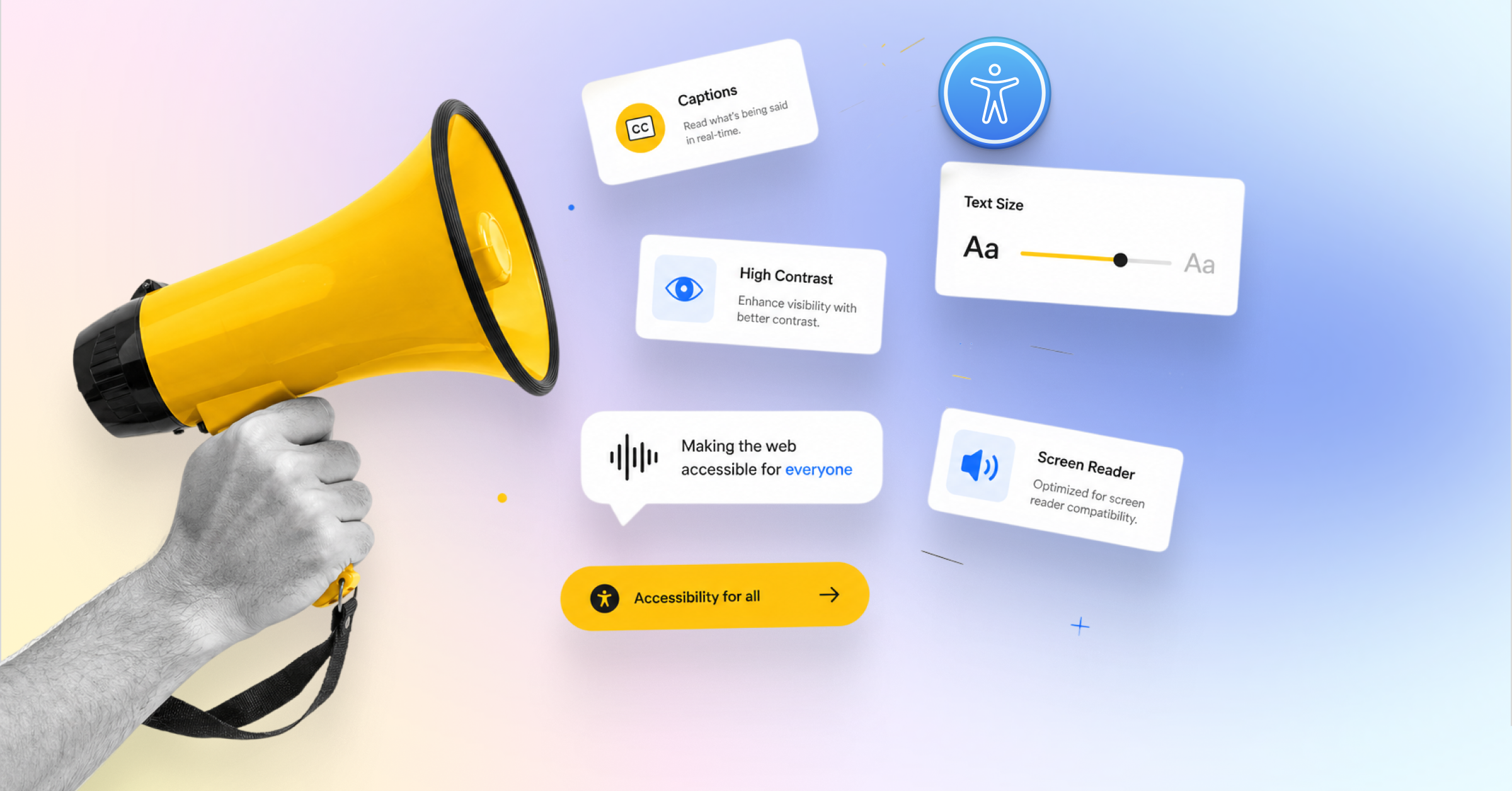 Why inclusive marketing starts with accessibility
The digital world is moving so fast that it’s hard for any brand to keep up. We spend a lot of time talking about marketing strategies making sure our photos and stories reflect everyone. But there’s a huge piece of the puzzle that often gets ignored: digital accessibility.
It’s one thing to show someone they’re welcome in your ads; it’s another thing entirely to make sure they can actually "walk through the front door" of your website. Whether you're selling services or digital products, your digital content needs to be usable for everyone.
In this post, we’re diving into some eye-opening data from HubSpot’s 2025 State of Inclusive Marketing report. While HubSpot does a great job looking at the big picture (and you should definitely check out the full report for the storytelling side of things), we’re going to focus on how your digital space is actually built. We’re looking at the strategy that ensures your web accessibility works for everyone, not just a few.
Here’s what we’re diving into:
How Airbnb used 3D tech to prove to guests that their "accessible" homes actually work.
What Domino’s learned when the courts ruled that an unusable website is just like a locked front door.
Why Microsoft stopped treating accessibility as a "fix" and started using it to invent their most popular features.
How Netflix took something designed for a few people and turned it into a feature that 80% of their audience now uses.
For ages, businesses have treated web content accessibility like a boring legal chore—just a list of boxes to tick to stay out of trouble. But honestly? That mindset is a massive missed opportunity for inclusive brands.
When you stop seeing accessibility as a burden and start seeing it as a design challenge, something powerful happens: your user experience actually gets better for everyone. It forces you to get rid of the fluff and focuson making things clean and logical.
If you need a real-world example of why "waiting until later" is a bad idea, just look at the Domino’s Pizza case. They ended up in a huge legal battle because a blind customer couldn't order food through their app, evenwith his assistive technologies.
The court's decision was a bit of a wake-up call for the digital world: they ruled that a website is a public space, just like a physical shop. If a customer can't use your site, it’s legally the same as locking your front door in their face. It sends a pretty loud message that certain people aren't welcome—and that’s never a good look for any brand.
Deep Dive: Read the full summary of the Domino's case here.
One of the most interesting bits in the HubSpot report is that "limited budget" is still the second biggest reason brands hold back on inclusion. But honestly? That’s a bit of a misunderstanding of digital marketing ROI.
The data shows that inclusive ads actually bring in 5% higher short-term sales and a whopping 16% boost in the long run. When you realise that 1 in 6 people globally live with some form of disability, you aren't just "spending money on a feature"—you’re expanding your ability to reach 16% of the market you were previously ignoring. It’s a massive opportunity that most brands are still leaving on the table.
We’ve all seen it: brands that put up a rainbow logo or a diverse photo for a month and then forget about it. HubSpot found that 90% of marketers see the demand for inclusion, but the trap many fall into is the"checkbox approach." They invest in the imagery but forget the actual experience.
As Nandi Howard from Ulta Beauty points out in the study, the brands winning right now are the ones weaving inclusivity into their DNA every single day—not just during a heritage month.
For a digital brand, this means your website needs to be "open for business" to everyone, 365 days a year. Using the right mix of accessibility tools and expert support means you aren’t just participating in a trend; you’re building a brand that stays loyal to its customers. And as 8 in 10 marketers now agree, that’s exactly how you build long-term loyalty.
There’s a brilliant concept called the "Curb-Cut Effect". Originally designed for wheelchair users, curb cuts now help parents with prams and travellers with heavy suitcases.
In the digital world, inclusive digital environments work the same way. When you add things like high color contrast or clear keyboard navigation, you aren’t just helping people with mobility impairments; you’re makingyour site more "user-friendly" for everyone.
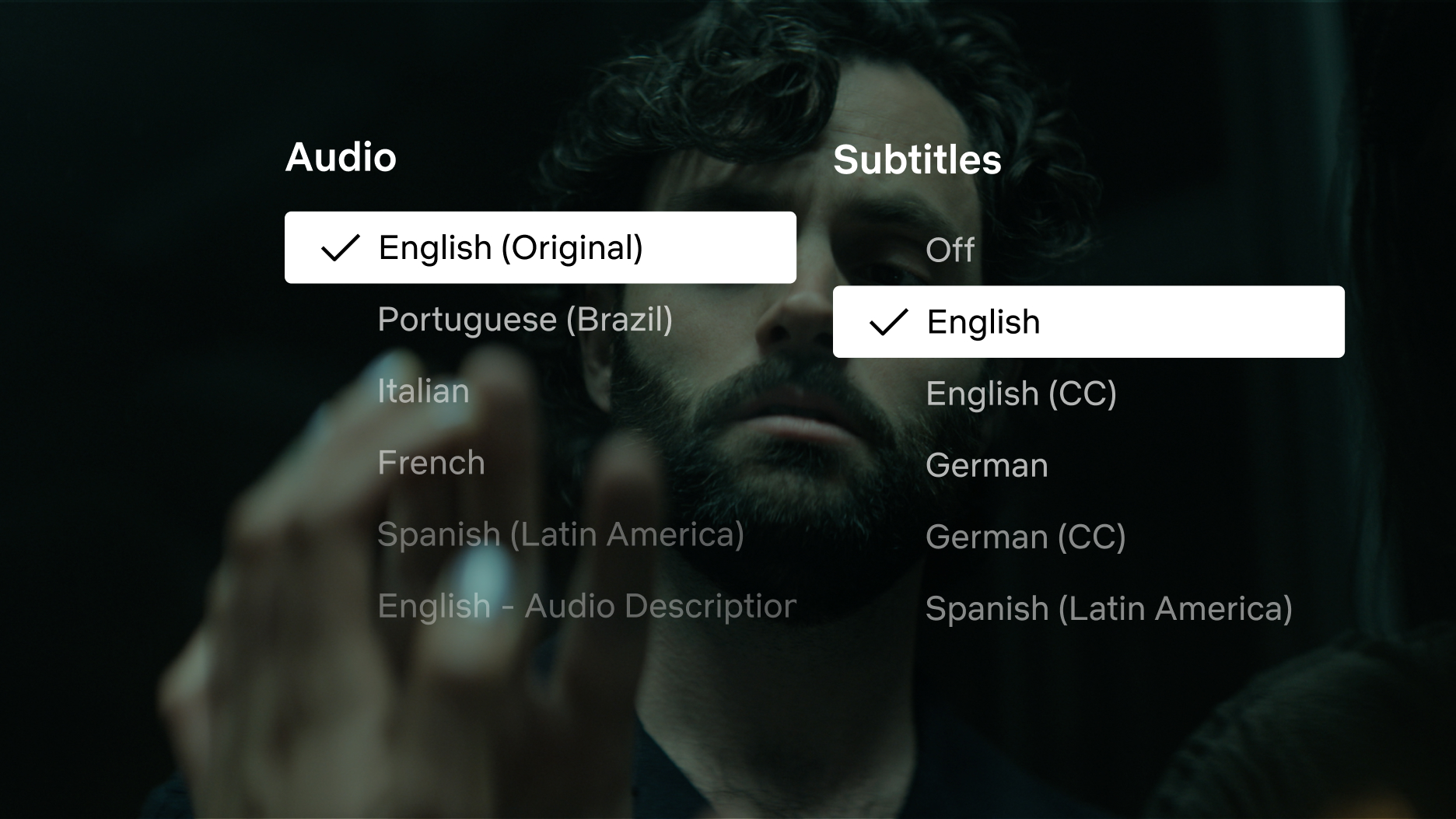
Netflix originally brought in high-quality video captions for the Deaf community. But have a look at the data now: 80% of Netflix users turn subtitles on at least once a month, and 40% keep them on permanently.
Most of these people don't have visual impairments or hearing loss; they’re just "situationally" limited—like watching a video on a noisy commute. Netflix solved a specific problem for some, and in the process, they created a feature that almost everyone refuses to live without.
Learn more in this video: Why 80% of Netflix Users Use Captions?
Search engines don’t experience your website the way humans do. They rely on structured content—similar to how assistive technologies interpret a page.
When you use semantic HTML, clear headings, and alternative text, you’re not just improving accessibility. You’re making it easier for search engines to understand and rank your content.
Think of it like this:
Alternative text gives the bot "sight" so it knows what your images are about.
Proper headings give the bot a "map" so it understands your page structure.
Captions give the bot "hearing" so your videos actually show up in searches.
Read more: Digital accessibility and SEO: why Google loves these websites too
By making your site work for a user with a visual or hearing impairment, you’re accidentally giving Google exactly what it wants. It’s the easiest way to boost your rankings while doing the right thing.
At the end of the day, making your site accessible isn't just about the 16% of the world living with a disability—it’s about making sure your brand is easy to find and easy to use for 100% of your audience. When youmake life easier for search bots, you make it easier for people, too. It’s a total win-win: you get better visibility on Google, lower "bounce rates" (because people aren't clicking away in frustration), and ultimately, more people actually buying what you're selling.
We’re living in an era where people really care about a brand’s values. But here’s the thing: you can’t just say you’re customer-centric; you have to prove it.
If your marketing says you’re "inclusive" but your website is impossible for someone using a screen reader to navigate, that’s going to breed a lot of distrust. People can spot "performative" marketing from a mile off. Being open and honest about your accessibility journey shows that your commitment is the real deal. It builds a deep connection with your audience that sets you apart from the brands that are just "ticking boxes."
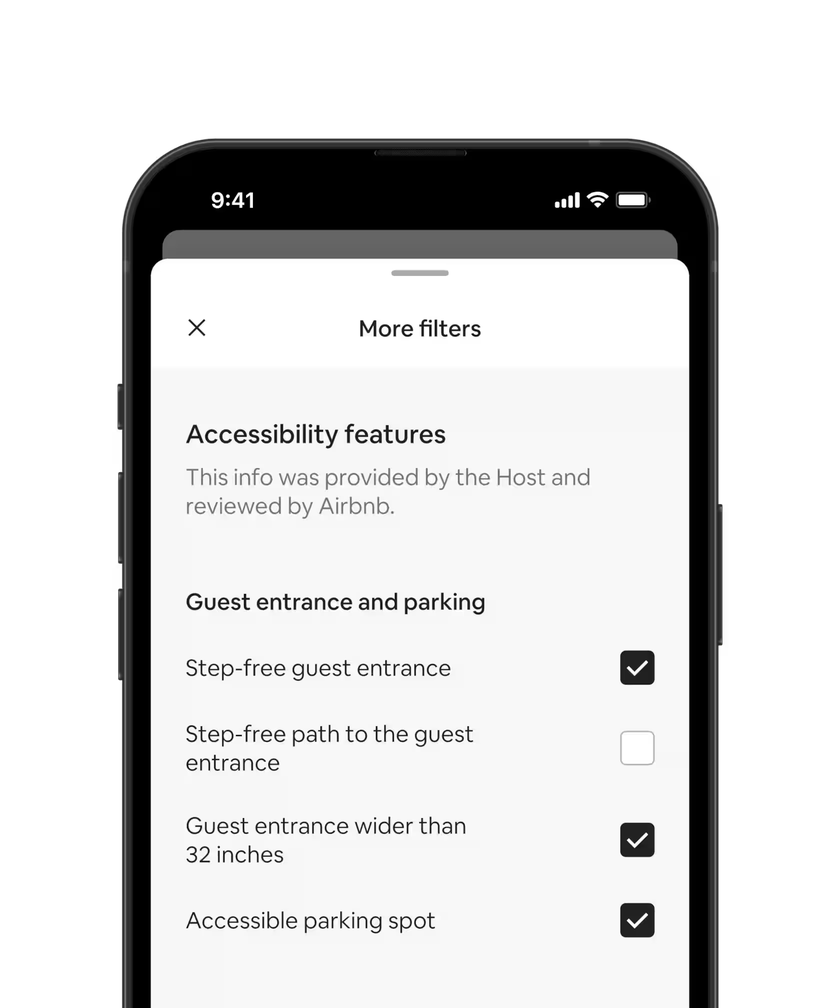
For travellers with disabilities, booking a holiday home is often a bit of a gamble. A host might say their place is wheelchair-friendly, but if the guest arrives to find a tiny step at the front door or a bathroom that’s an inch too narrow, the whole trip is ruined. This "trust gap" is a massive reason why many people are scared to hit the "book" button.
To solve this, Airbnb did something clever. They launched an "Adapted" category, but instead of just taking the host’s word for it, they used 3D scanning technology to map out the homes.
The "Proof" Factor: These scans give guests visual proof and exact measurements of every doorway and floor level. No more guessing.
The Result: By the 2024 Paralympics, Airbnb had verified over 1,100 homes globally, making sure people could book with total confidence.
The lesson for your brand: Accessibility is really just about accuracy. Whether you’re using 3D scans or just making sure your website is built logically, you’re giving your customers the certainty they need to stop browsing and actually start buying.
Read more: Explore the Airbnb "Adapted" Category & Accessibility Standards
 Why getting accessibility right is easier than you think
 If you’ve ever looked into the Web Content Accessibility Guidelines (WCAG), they can seem a bit overwhelming. But you don’t need to be a legal expert.
Instead of getting bogged down in jargon, just aim for the WCAG Level AA standard. It’s the "sweet spot" that ensures your digital content is accessible to the broadest possible audience.
The world is definitely changing, and the rules are catching up. Between the UK Equality Act and the new European Accessibility Act, making your website accessible isn't just a "nice-to-have" anymore—it’s becoming the standard for doing business.
But don’t look at this as a chore to avoid a fine. Look at it as "future-proofing." By getting your site ready now, you’re positioning yourself as a brand that’s actually leading the way, rather than one that’s scrambling to catch up when the laws change.
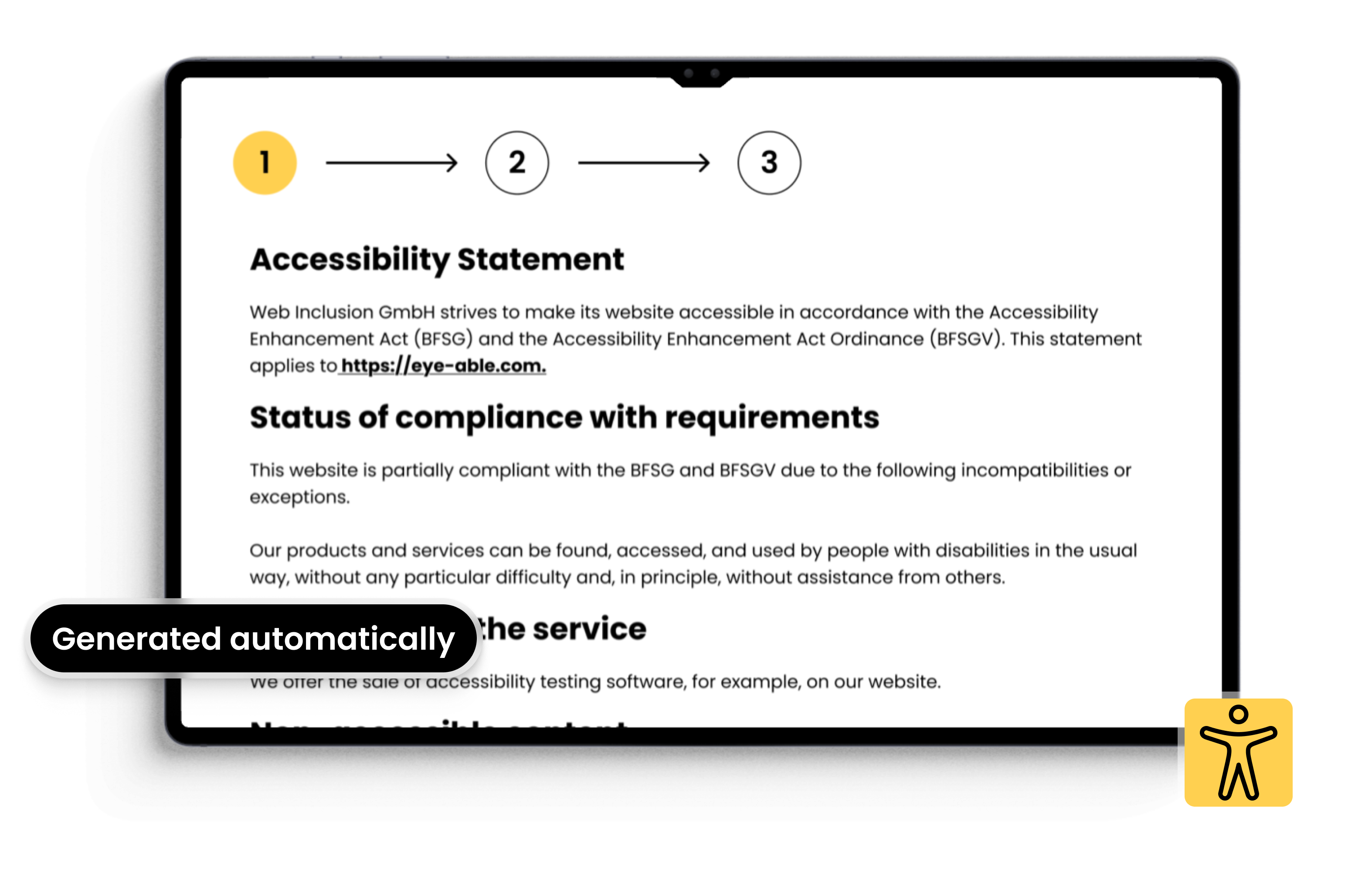
One of the best things you can do is publish a simple, honest Accessibility Statement. Don't worry if you aren't 100% perfect yet—no one is!
Just be transparent. Tell your users what you’ve fixed, what you’re working on, and give them a direct way to get in touch if they run into a problem. It turns a "technical requirement" into a huge badge of trust. It shows your customers that you actually care about their experience and that you’re committed to getting it right.
 Making your content work across every channel
It’s not just about your website. Social media platforms and emails are often the first touchpoints with your brand, so they need to be just as accessible. Simple steps like adding alternative text descriptions, using clear hashtag structures, and including captions help ensure your content works seamlessly with assistive software—while also improving engagement for everyone.
The same applies to emails and video. High contrast, readable layouts, and accessible formats like captions or transcripts make sure your message can be understood in any context, whether someone is on the go or relying on assistive tools.
An accessible website isn’t just about how it looks—it’s about how people move through it. Features like keyboard navigation ensure that users can interact with your site without relying on a mouse, while clear language and structured layouts reduce friction for everyone.
Behind the scenes, compatibility with assistive tools is key. When your site is built cleanly and logically, assistive technologies can interpret your content correctly—creating a smoother, more reliable experience for all users.
AI is making accessibility easier to scale. Tools can now generate alternative text descriptions automatically, helping teams make large volumes of content more accessible without slowing down workflows.
At the same time, voice recognition technology is changing how people interact with digital content. As more users rely on voice interfaces, building structured, accessible websites ensures your content can be understood across different formats and devices.
Microsoft shifted their culture toward inclusive design. They built the Immersive Reader to help users with learning disabilities, but it’s now used by millions of professionals to reduce eye strain. They proved thatwhen you design for the most extreme needs, you inevitably create a better product for the whole planet.
Read more: Have a look at Microsoft’s own journey into inclusive design here
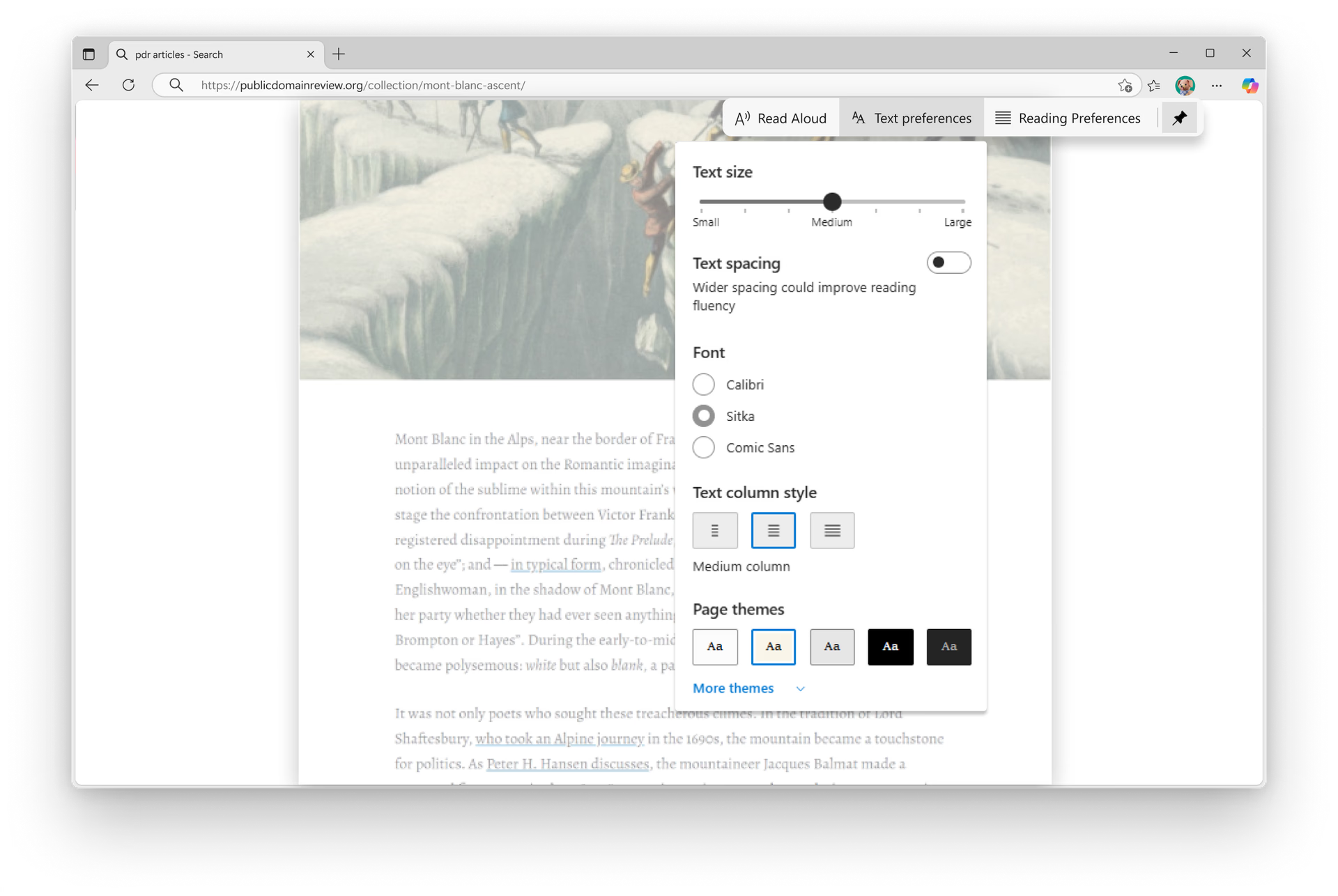 Designing for a calm and usable experience
 We’ve all been on websites that feel overwhelming, with flashing banners, auto-play videos, and cluttered layouts. For neurodivergent users or people with dyslexia, this isn’t just frustrating; it can make a site completely unusable.
A calmer experience with clear navigation, readable fonts, and control over moving elements helps users focus and move through your content with confidence. But usability goes beyond visual design. If buttons are toosmall, forms too complex, or interactions require precision, people will drop off quickly, especially those with limited motor control or anyone using your site on the go.
The goal is simple: reduce friction at every step. When your site is easy to navigate, forgiving in its interactions, and structured logically, it becomes more accessible for everyone, not just a specific group.
At the same time, the way people interact with digital content is evolving. Voice interfaces and assistive technologies rely on well-structured content to interpret and navigate websites. Tools like Be My Eyes even provide real-time human support as a fallback, but ideally your website should be intuitive enough that users don’t need that extra layer in the first place.
A calmer experience with clear navigation, readable fonts, and control over moving elements helps users focus and move through your content with confidence.
Accessibility isn’t a one-off fix or a task for a single team. It’s a mindset that needs to be embedded across your organisation—from design and development to content and marketing.
Digital accessibility is the foundation of a brand that’s actually built to last. By shifting your perspective, you unlock the ability to serve a more diverse and loyal audience.
It can feel like a lot to take in, but you don’t have to do it all at once. Whether you’re ready to run your first accessibility audit or you want to train your team on the basics, our expert team is here to guide you through the process and help you get it right.
Don't let inaccessibility compromise your market reach. Evaluate your digital landscape now and bridge the gaps in your customer journey.
The Lega Basket Serie A is focusing on digital accessibility: a new step forward with the support of Infront and Eye-Able.
Read story:no_upscale())
AIL: Digital inclusion thanks to Eye-Able.
Read story:no_upscale())
Stanca Law
Read story:no_upscale():format(png))
What does it cost to make your website EAA-compliant?
Read story:no_upscale():format(png))
Why digital accessibility is now law: Introducing the EAA
Read story:no_upscale():format(png))
Celebrating 5 years of Eye-Able
Read story:no_upscale():format(png))
WCAG compliance levels: Understanding A, AA and AAA
Read story:no_upscale():format(png))
WCAG 2.2: What applies now & what’s coming with WCAG 3.0
Read story:no_upscale():format(png))
Accessibility test: How to check your website properly
Read story:no_upscale():format(png))
WCAG and accessible design – How to apply it in practice
Read story:no_upscale():format(png))
BFSG: Who is affected?
Read story:no_upscale():format(png))
How to create accessible PDFs: Simple & legally compliant
Read story:no_upscale():format(png))
:no_upscale():format(png))