:no_upscale())
Een overlay maakt een website niet vanzelf toegankelijk
Lees verhaal
 Handel nu – voordat de audits beginnen.
Vanaf januari 2026 zal de Marktüberwachungsstelle der Länder (MLBF) consequent controleren en actief bewijs opvragen dat organisaties aan hun documentatieverplichtingen voldoen. Dit betreft de volledige en traceerbare documentatie van alle genomen maatregelen om te voldoen aan de eisen van de Duitse Barrièrerefreiheitsstärkungsgesetz (BFSG) .
Voor organisaties die hun digitale of fysieke producten nog niet hebben aangepast, is dit hét moment om actie te ondernemen en elke stap op een transparante manier vast te leggen.
Dit artikel legt uit wat er nu toe doet en hoe u ervoor kunt zorgen dat uw documentatie aan de eisen voldoet.
Het feit is BFSG toegankelijkheidsdocumentatie zullen Er zullen audits plaatsvinden – het is nog onduidelijk of deze controles aangekondigd of onaangekondigd zullen zijn. Des te meer reden om nu al met uw analyse te beginnen en een duidelijk actieplan op te stellen.
Begin met een inventarisatie: Identificeer alle producten en diensten die onder BFSG vallen en bekijk welke maatregelen al zijn gedocumenteerd.
Ontwikkel een auditstrategie: Bepaal hoe u uw digitale content regelmatig gaat controleren – bijvoorbeeld door een combinatie van geautomatiseerde tests, handmatige gebruikerstests en tools met AI-ondersteuning.
Documenteer naleving en voortgang: Leg alle reeds geïmplementeerde maatregelen vast en voeg geplande verbeteringen en mijlpalen toe. Dit bewijst niet alleen de huidige naleving van BFSG, maar maakt van uw documentatie ook een levend overzicht van continue toegankelijkheid.
Publiceer een toegankelijkheidsverklaring: Verstrek de informatie die vereist is onder Bijlage 3 BFSG openbaar – toegankelijk, gemakkelijk te vinden en actueel gehouden.
Zorg voor een veilig opslagsysteem: Zet een intern systeem op dat uw documentatie minstens vijf jaar veilig bewaart en dat te allen tijde toegankelijk is.
Zorg dat alles up-to-date blijft: Elke wijziging aan een product of dienst moet onmiddellijk worden gedocumenteerd. Gebruik versiebeheer en wijzigingslogboeken om alle aanpassingen transparant te houden.
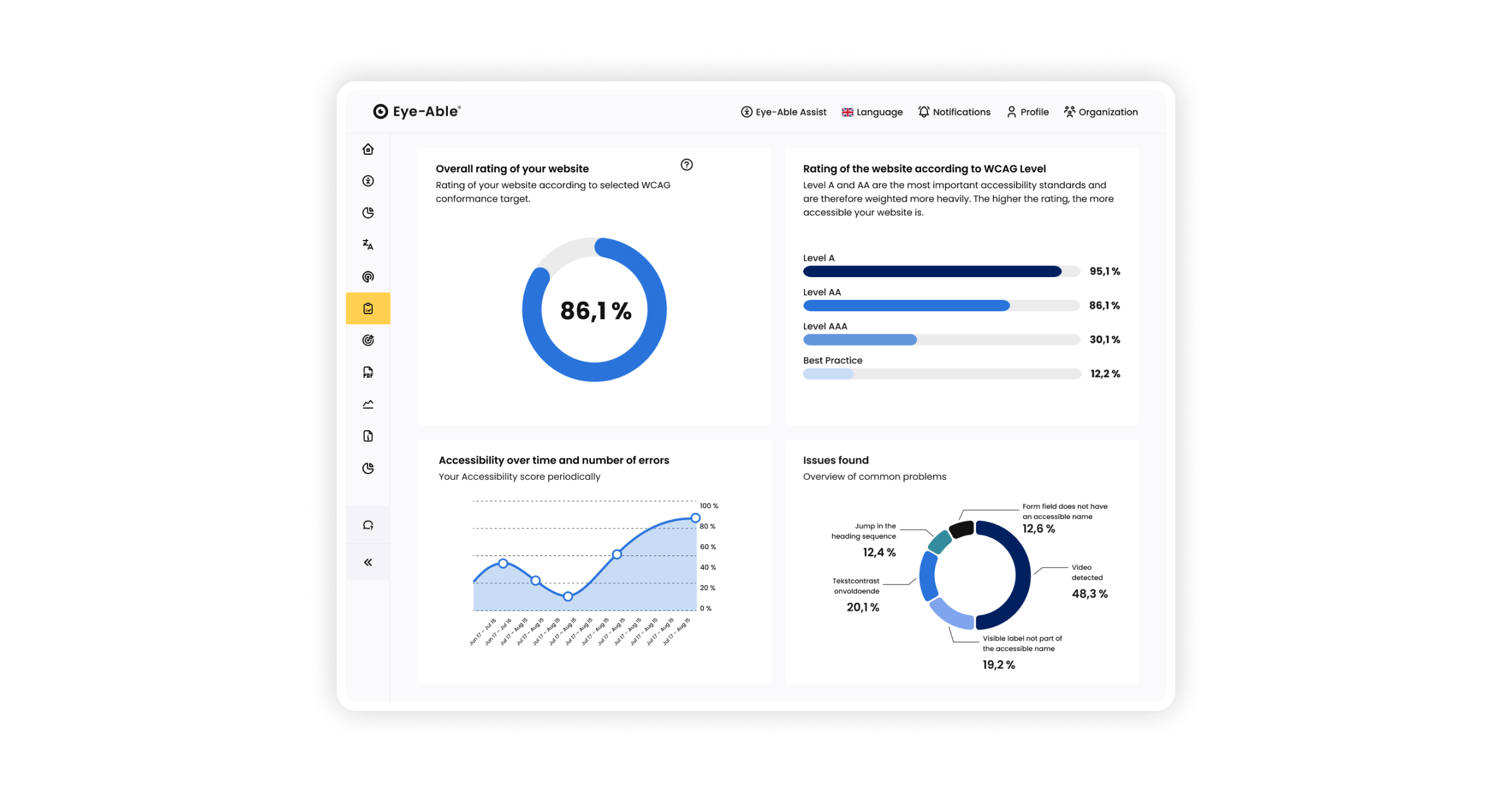
Eye-Able ondersteunt u: Met het Eye-Able-platform hebt u analyse, optimalisatie, documentatie en monitoring van uw toegankelijkheidsmaatregelen allemaal op één plek – zodat u altijd voorbereid bent op een audit.
 Wat zijn de gevolgen van ontbrekende of onvolledige documentatie?
De BFSG stelt geen vaste deadline voor het indienen van documentatie. In plaats daarvan zal de markttoezichtautoriteit per geval een "passende deadline" vaststellen – en de lengte daarvan is niet te voorspellen. Iedereen die pas reageert nadat een dergelijk verzoek is ontvangen, komt al snel onder aanzienlijke tijdsdruk te staan.
Ontbrekende of onvolledige documentatie kan leiden tot een volledig distributieverbod en moet daarom ten koste van alles worden vermeden.
Daarnaast kunnen overtredingen van de documentatieplicht leiden tot boetes van maximaal € 100.000.
Documentatie is het belangrijkste bewijsmateriaal om aan te tonen dat een organisatie voldoet aan de toegankelijkheidseisen – of om eventuele afwijkingen te rechtvaardigen. Tijdens steekproefsgewijze inspecties zullen markttoezichthouders deze documenten opvragen om de conformiteit van producten en diensten te controleren. Zonder degelijke documentatie kan een organisatie niet aantonen dat zij de wet naleeft.
De verplichting geldt voor alle fabrikanten van producten en aanbieders van diensten die onder de BFSG vallen, zoals bijvoorbeeld banken, telecomaanbieders of e-commercebedrijven.
Een gedetailleerd overzicht vindt u in het artikel “ BFSG: Wie wordt hierdoor getroffen? "
Volgens de wet zijn drie documenten vereist: technische documentatie , toegankelijkheidsinformatie en de EU-conformiteitsverklaring .
Ja. Het moet openbaar beschikbaar worden gesteld in een toegankelijk formaat en aan gebruikers uitleggen hoe aan de toegankelijkheidsvereisten wordt voldaan. Belangrijk: de toegankelijkheidsverklaring is een aanvulling op uw documentatie, geen vervanging ervan.
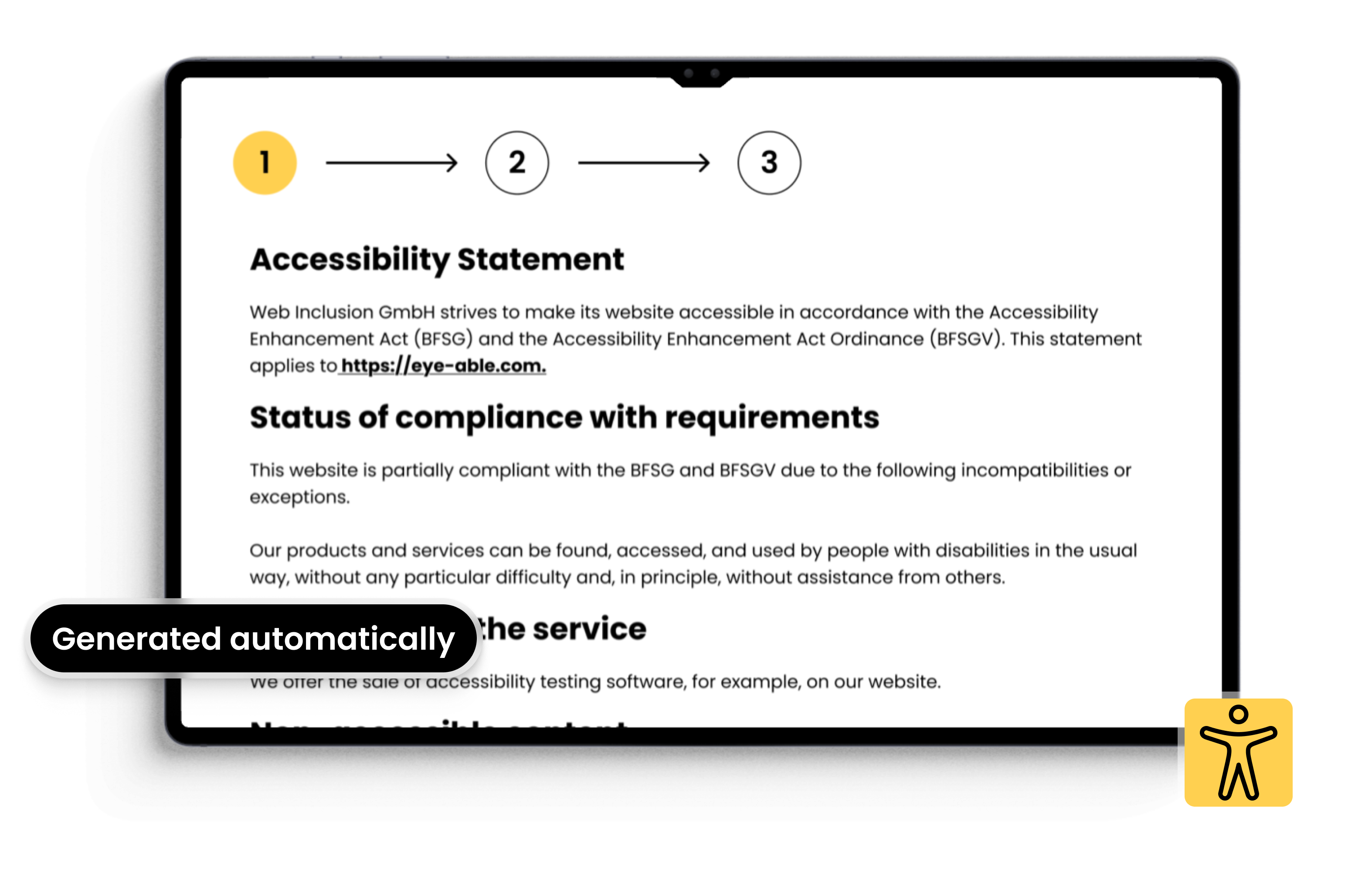
Met de Eye-Able Accessibility Statement Generator kunt u snel en eenvoudig een complete, wettelijk conforme toegankelijkheidsverklaring opstellen. De generator is ontwikkeld in samenwerking met een gespecialiseerd advocatenkantoor voor IT-, gegevensbeschermings- en mediarecht en houdt automatisch rekening met de verschillende eisen voor overheidsinstanties en particuliere organisaties, inclusief landspecifieke regelgeving.
Relevante informatie uit uw Eye-Able-rapporten, PDF-controles en de resultaten van begeleide tests wordt automatisch opgenomen en geïntegreerd in het overzicht. U kunt op elk gewenst moment uw eigen handmatige testresultaten toevoegen.
Wanneer uw status verandert, werkt Eye-Able uw overzicht automatisch bij en stelt u op de hoogte van de nieuwe versies.
 Hoe lang moeten de documenten bewaard worden?
Documentatie over toegankelijkheidsmaatregelen moet ten minste vijf jaar beschikbaar zijn nadat een product op de markt is gebracht, of gedurende de gehele looptijd van een dienst.
Organisaties moeten ervoor zorgen dat hun toegankelijkheidsinformatie gemakkelijk te vinden en toegankelijk is — bijvoorbeeld op hun website (in de voettekst of op een speciale pagina 'Toegankelijkheid'), in hun algemene voorwaarden of binnen een app of digitale dienst.
Ja. Elke wijziging aan producten of diensten moet onmiddellijk worden gedocumenteerd, ongeacht of het gaat om nieuwe content, functies of bestanden. Zo kunt u altijd aantonen welke onderdelen van uw website of app nog voldoen aan de huidige regelgeving en welke oudere elementen zijn gearchiveerd en niet langer actief worden onderhouden.
Uitzonderingen zijn slechts in zeldzame gevallen mogelijk en moeten goed onderbouwd zijn – bijvoorbeeld als bepaalde maatregelen onevenredig zouden zijn. Organisaties moeten aan de markttoezichtautoriteit uitleggen aan welke eisen niet kan worden voldaan en waarom; de autoriteit zal deze onderbouwing zeer nauwkeurig onderzoeken.
Allereerst: blijf kalm, maar handel snel. Een formele non-conformiteit betekent dat uw documentatie volgens bijlage 3 BFSG onvolledig is of niet toegankelijk is gemaakt. Veelvoorkomende redenen hiervoor zijn ontbrekende informatie of het aanleveren van de vereiste informatie in een niet-toegankelijk formaat.
Met Eye-Able krijgt u niet alleen krachtige functies en services voor uitgebreide digitale toegankelijkheid, maar ook een complete oplossing voor juridisch conforme documentatie.
Elke wijziging en elke maatregel wordt automatisch gedocumenteerd, inclusief datum en tijd. Dit betekent dat u altijd precies kunt bewijzen wanneer elke stap is uitgevoerd. Uw documentatie is daardoor niet alleen compleet, maar ook wettelijk conform en volledig transparant voor de markttoezichthouder.
Concreet betekent dit:
Geautomatiseerd bewijsmateriaal: Alle acties worden geregistreerd en voorzien van een tijdstempel.
Stapsgewijze handleiding: Duidelijke uitleg en concrete aanbevelingen maken uw documentatie gemakkelijk te begrijpen.
Altijd actueel: Uw toegankelijkheidsverklaring wordt automatisch gegenereerd, regelmatig bijgewerkt en gepubliceerd in een volledig toegankelijk formaat.
Continue updates: Regelmatige controles en rapportages zorgen ervoor dat uw documentatie altijd actueel is.
Deskundige ondersteuning van Eye-Able: Onze toegankelijkheidsspecialisten en ons ondersteuningsteam werken rechtstreeks met u samen om ervoor te zorgen dat uw documentatie volledig en conform de regelgeving blijft.
Samen zorgen we ervoor dat uw documentatie snel, betrouwbaar en aantoonbaar volledig voldoet aan de BFSG-richtlijnen.
Ontdek alle functies van het Eye-Able-platform — inclusief BFSG-compatibele documentatie.
Een overlay maakt een website niet vanzelf toegankelijk
Lees verhaal:no_upscale())
Digitale toegankelijkheid en SEO: waarom ook Google van deze websites houdt
Lees verhaal:no_upscale():format(png))
"Digitale toegankelijkheid is nu geen prioriteit" - en dat kost je elke dag omzet
Lees verhaal:no_upscale():format(png))
Toegankelijkheid iPhone: zo haal je alles uit de toegankelijkheidsinstellingen
Lees verhaal:no_upscale():format(png))
Mobiele toegankelijkheid: ben jij er klaar voor?
Lees verhaal
AI accessibility: Hoe organisaties inclusieve digitale ervaringen maken
Lees verhaal:no_upscale():format(png))
Eye-Able als alternatief: wat organisaties écht nodig hebben
Lees verhaal:no_upscale())
Hoe kom ik aan een toegankelijkheidsverklaring voor de EAA?
Lees verhaal:no_upscale())
Alt-tekst: zo maak je afbeeldingen toegankelijk voor iedereen
Lees verhaal:no_upscale())
Hoe AI een handje helpt bij de Wet Digitale Toegankelijkheid
Lees verhaal:no_upscale())
Veelgemaakte fouten Wet Digitale Toegankelijkheid (EAA)
Lees verhaal:no_upscale())
De Wet Digitale Toegankelijkheid (EAA) voor het MKB: Zo krijg je je medewerkers mee!
Lees verhaalNeem contact met ons op en we helpen u graag verder.
:no_upscale():format(png))
:no_upscale():format(png))